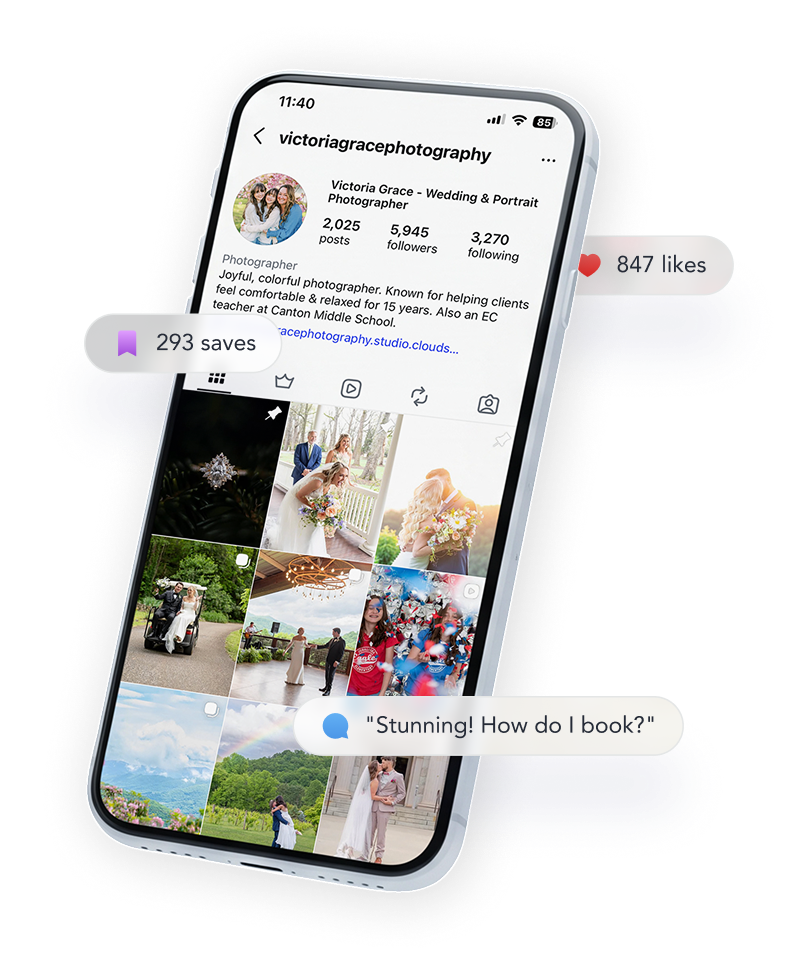
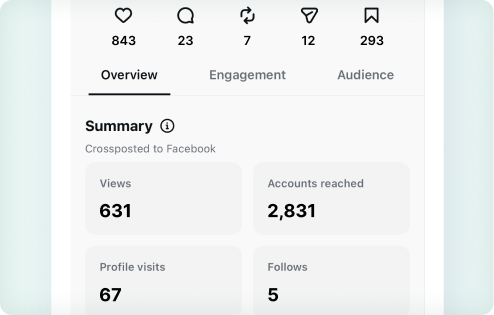
A field study of more than 50 actively booking photographers, broken down post by post.
Enter your email and start reading right away.
From the team behind CloudSpot, trusted by more than 10,000 photographers.

photographers studied
data points per account
niches: wedding and portrait
Every Instagram guide tells you the same handful of tips. Post Reels. Use trending audio. Be consistent. Engage, engage, engage.
Not one of those guides was written by someone who watched working photographers book real clients. And not one of them separated what the photographers who are actually getting inquiries do differently from the advice everyone else repeats.
So we did the work ourselves. We studied more than 50 photographers across wedding and portrait niches, tracked over 40 data points per account, and looked at what the ones who are actually booking have in common. The patterns are not what most guides are telling you.

Reels are not doing the heavy lifting.

Your bio might not be saying what you think it is.

Giving people a menu when they tap your link might be working against you.
A clear read on which formats are worth your time, broken down by niche, so you can stop second-guessing what to post.
A sharper view of where the popular Instagram advice falls apart compared to what actively booking photographers do in practice. The gap is bigger than most people expect.
One specific bio change that makes your availability obvious to potential clients. The kind of signal the actively booking photographers in our study use consistently.
A plain-language read on Instagram's April 2026 originality changes and what they mean for photographers who count on the platform to get found.
Plus three more findings inside.

I built CloudSpot because I've lived both sides of the same frustration. Getting started without knowing which moves actually mattered. And later, being years into it with a real body of work behind me, but watching bookings plateau while doing everything the guides said to do. If either of those sounds like where you are right now, this report is for you.
It exists because I got tired of watching photographers in both of those places follow advice that was clearly written for a different kind of creator. So I went through the accounts of more than 50 actively booking photographers, one by one, and recorded what I could actually observe: bios, format mix, captions, links, posting patterns. Over 40 data points per account. What I found surprised me. A lot of what's working is not what most guides are recommending. This report is free because I think every photographer deserves to see the data, not just the ones who can afford a course or a coach.
Free. Instant access. No spam, ever.
The full report unlocks right here on the page.
Most photographers we know are not bad at Instagram. They are tired of it. You probably feel some version of that right now.
You posted a Reel that took two hours and got 90 views. The carousel before it took an hour and went nowhere. Hashtags are noise. Trending audio is a treadmill. The wedding you just shot got 47 likes and three of those were from your mom.
Here is what almost nobody is telling you: the platform itself is changing in your favor.
On April 30, 2026, Adam Mosseri, who runs Instagram, posted that Instagram is rolling out an originality update to the algorithm across photos and carousels, the formats photographers actually use. In his own words: "If most of what you post to Instagram is someone else's content, your account is no longer going to be recommendable."
That announcement is built for photographers. By definition, you post your own work. The accounts that have been gaming the feed by reposting other people's photos are about to lose the visibility they had. And the photographers who have been quietly making original work all along are about to be the ones the algorithm rewards.
So we did the work. Over the past four weeks we studied 52 wedding and portrait photographers in the United States who are actively booking clients through Instagram in 2026. This is what we found.
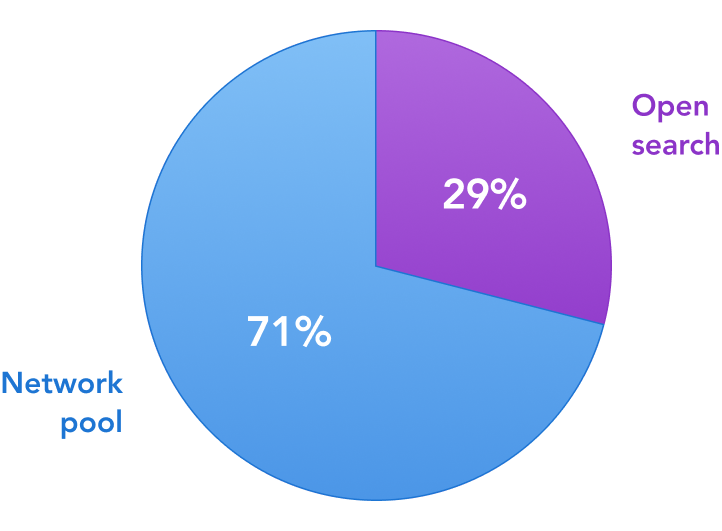
Photographers from our network of working photographers and trusted industry contacts
Photographers found through open hashtag and search results, the same way a stranger would find them

For each photographer, we cataloged 40 data points per account: bio language, link structure, content format mix, caption length, audio use, posting cadence, and more. We were not looking for follower counts. We were looking for what actively booking photographers do that the rest of the field does not.
A more detailed methodology lives at the end of this report.
The share of posts that were Reels. The rest were carousels and photos.
Posted zero Reels during the study period. They were still booking.
Photographers found through regular Instagram search lead with carousels.
The first thing the data says, loud and clear: carousels are not dead. Carousels are what actively booking photographers post.
Eight of the 37 photographers from our network ran zero Reels in the period we studied. They booked anyway. Among the photographers we found through open hashtags and search, the carousel skew is even sharper. Seven of the 15 ran zero Reels. Eleven of the 15 ran carousel-dominant grids.
Read quickly, that can sound like permission to drop Reels for good, and that is the wrong read. What it really shows is that the one format built to put their work in front of strangers is sitting almost untouched, while these photographers book on the strength of their carousels alone. Most gave up on Reels because making them has been miserable, not because they stopped working.
And that gap is the opportunity hiding in this report. The decision side of Instagram is being won with carousels. The discovery side is sitting nearly empty, not because Reels stopped reaching strangers, but because the cost of making them has been too high for a working photographer to keep paying. The first photographers who get that cost down will have the discovery lane largely to themselves, in front of an audience their competitors gave up on reaching.
Reels are how people find you. Carousels are how they decide.
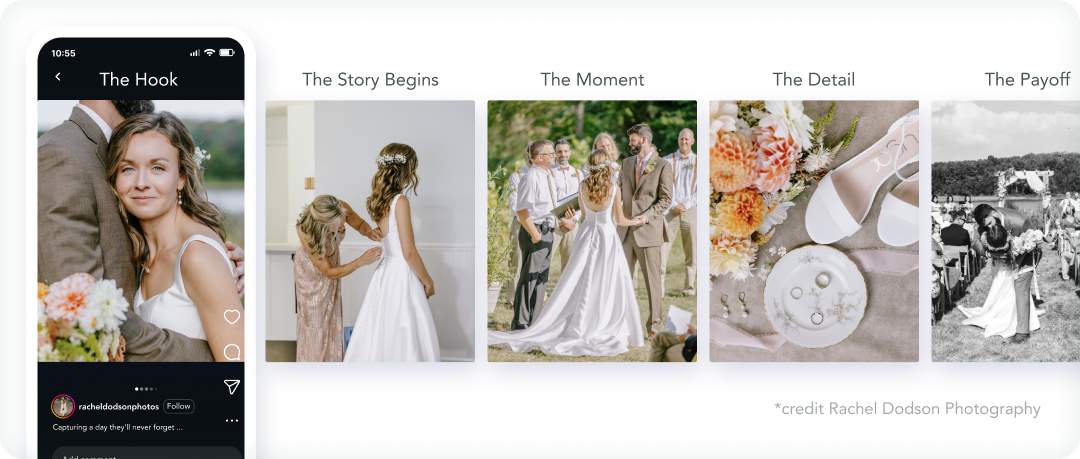
Carousels are how your work tells a story to someone who is already considering hiring you. A bride scrolls through eight images of a wedding day and sees how you handle light, how you handle rain, how you handle the dress reveal. By the time she gets to slide eight, she has imagined her own wedding in your hands.
Most of the photographers who are booking right now are not running themselves into the ground doing both at the same volume. They are choosing what to lean into based on what they are trying to do that month.

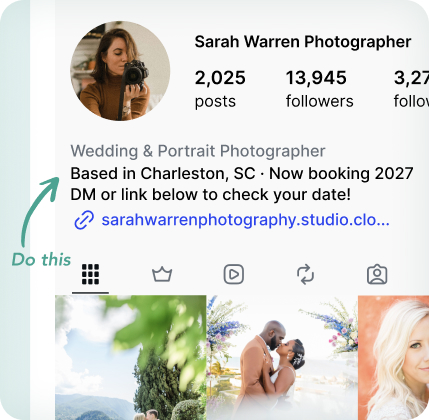
Name a city or region in their bio. Easy to find, easy to hire.
Carry a "now booking" line. The single clearest signal in the entire study.
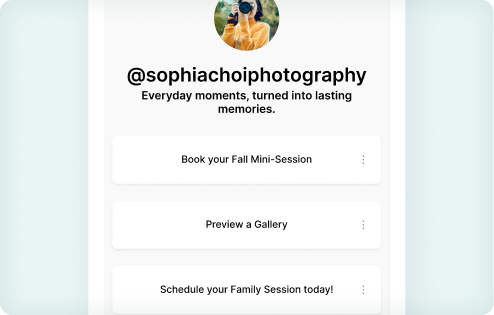
Run a single direct bio link. One destination, no decision required.
Of the 37 photographers in our network pool, at least 13 named a city or region in their bio. In our open-search pool, 11 of 15 did the same. Charleston. Cleveland. Vermont. Southern Utah. The Black Hills of South Dakota.
Instagram is not a search engine, but the people considering hiring you treat it like one. They look at your bio and ask: "Do you shoot near me?" If the answer is in the bio, you are in. If not, you are out.


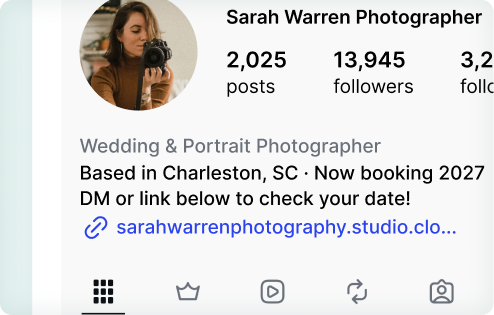
The single clearest visible booking signal in the entire study is a line that says "Now booking 2026" or "Now booking 2027" sitting in a photographer's bio. Nine of the 15 from the open pool carry it.
Most photographers do not put this line in their bio. They write something about loving golden hour and being a dog mom. There is nothing wrong with loving golden hour. But the bio is the cheapest piece of real estate on the platform, and the photographers who are booking are using it as a sign that says open.
In the open-search pool, 10 of 15 photographers had a single bio link going directly to their own website or a purpose-built page that does one thing well.
What the person clicking should see: your work, your name, where you shoot, that you are booking, and one obvious next step. Whether you use your website or a clean inquiry page does not matter. What matters is that they do not have to figure anything out.


A small but vivid group of photographers takes the "now booking" line one step further. They use the bio as a real-time status update. "Summer bookings closed / now booking 2027 seniors for October." That line names what is closed, what is open, and when. Seven photographers in our entire study do it. Where it appears, it concentrates the strongest forward-booking evidence in the dataset.
Most of the Instagram advice you have absorbed in the past two years has been about inputs. Use this trending audio. Make your Reels under 90 seconds. Post daily. Use these 30 hashtags. The implicit promise is that if you get the inputs right, the bookings will follow.
The data does not back this up. Reel length across the active accounts ranges from 8 seconds to 115 seconds with no pattern. Posting cadence ranges from 0.3 posts a week to 3.3 posts a week, with actively booking accounts at every point on that range.
There is no magic input. The photographer posting twice a month and the one posting three times a week are both booking.
That is the release valve. Now the productive part. There are two things Instagram itself has confirmed are worth your attention.
Instagram has been clear, repeatedly, that content carrying watermarks from other apps gets downranked. TikTok logos. CapCut logos. Any of those tells. The platform reads them as a signal that the post was made for somewhere else.
When you post a Reel, get your audio from inside Instagram. Use the audio library Instagram gives you, or use the original audio from your own clip. Where the audio came from matters more than which audio you pick.


About half of Instagram videos are watched without sound. That number comes from Mosseri directly. Half. If your Reel only makes sense with the audio on, you are losing half of your potential viewers in the first second.
Put a few words of text on the first frame. A name, a question, a place. "Couples in Vermont." "Family in Charleston, end of summer." That text tells the silent viewer instantly what they are looking at, and tells the algorithm who this content is for. This applies to carousels too.
Actively booking photographers who write long captions. Not educators. Not coaches.
Average words per post for the longest-caption photographer in the study. She is booking weddings.
There is a stubborn idea among photographers that long captions are an "educator" thing. Coaches and course-sellers write long captions because they have a lot to teach. Photographers who book write short ones because they are showing up for the work, not the words.
The data says that idea is wrong.
Nine working photographers in our network pool, plus two more from the open pool, average 100-plus word captions on their posts. Kate Dye, a Charleston wedding photographer, runs the longest captions in the entire study at an average of 230 words per post, leaning into hot-take opinions and writing in her own voice.
Long captions are not a tactic. They are a function of the photographer's voice.
The trap to avoid: writing long captions because you read somewhere that long captions perform better. There is no number of words that books a wedding. Caption length is the result of the photographer's voice, not the cause of anyone's bookings.
If you have been writing short captions because you read short is best, you have permission to write longer when you have something to say. If you have been writing long because you read long is best, you have permission to write short when you do not. The data does not care. Your voice does.
Photographers in our network pool who run an education-side business alongside their booking work
Run accounts built mainly to teach other photographers. More than we expected when we started.
When you absorb advice from any account in your feed, the first question is: does this fit who I am and who I am trying to serve?
A meaningful share of the Instagram content you see in your feed is being made by photographers who also teach other photographers. The Instagram content an education-focused account makes is built for one job. The Instagram content a booking account makes is built for another. Both jobs are real. The tactics are different.
Authentic brands win. A bride choosing a photographer for the most important day of her life is not looking for a formula. She is looking for the person whose work, voice, and feel match hers. Your voice, your point of view, the place you shoot, and the kind of person you love working with already do that work. No tactic, no hook, no posting cadence will manufacture it for you.
The work for you is simpler than it sometimes sounds. Your photos are good. You shoot in a real place. You are taking on clients. Put those three things in your bio. Tell the story of the work in carousels. Show up at a pace you can actually keep up with.
Here is the short version of everything we found, in case you want to keep it close. Five findings. Five things you can do with them.
6 to 10 slides each. Tell the full story of the session from start to finish.
Where you shoot. That you are booking. One clear link. Most photographers are missing at least one.
Two inputs that actually matter. Everything else is up to you.
Eleven actively booking photographers write long captions. Voice is doing the work. Length is just the result.
Tactics come second. Filter every piece of advice: is this for a booking account or an education account?
6 to 10 slides each. Tell the full story of the session from start to finish.
Add your location. Add "Now booking 2026" or "Now booking 2027." Make sure your bio link goes directly to your work or inquiry form.
Add 2 to 4 words of text to the first frame that say who this is for.
Do not count words. Do not follow a formula. Let your voice decide.
ask one question first: is this account built to book clients, or built to teach photographers? Use that as your filter.
I want to say something before you close this out.
Keeping up with social media as a photographer is genuinely exhausting. You became a photographer because you love the work. The light. The people. The moment right before the couple sees each other for the first time. You did not sign up to be a content strategist, a trend-chaser, or a caption writer. And yet here we all are, trying to figure out how to keep the work we love in front of the people who need it.
That tension is real. I have watched photographers carry it for years, and if I am being honest, it is part of why we built CloudSpot in the first place.
So I hope this report gave you something useful: not more to do, but a clearer picture of what actually matters. Rewrite three lines of your bio. Post the carousel from last weekend's session. Add two words of text to your next Reel. These are small, specific, completely doable things. You are not starting over. You are just letting the work you are already doing reach a little further.
Your photos are good. Your clients are out there. And you can absolutely do this.
One more thing: the team at CloudSpot is working hard right now on something designed to take a real chunk of this weight off your plate. I am not ready to share the details yet, but I am genuinely excited for you to see it. It is not far off. Stay close.
A more detailed methodology, for the photographers who like the receipts.
We selected 52 wedding and portrait photographers in the United States who are actively booking on Instagram in 2026. Thirty-seven came from our network: long-time photographer relationships and trusted industry contacts. Fifteen came from the open hashtag and search results on Instagram. We required at least two of three booking signals visible on their account: an inquiry link in the bio, "now booking" or equivalent forward-availability language in the bio, and recent client tags in the captions or photos within the past 60 days.
We excluded photographers whose primary identity on Instagram was a branded product or community-run account (workshop brands, software companies, photography collectives), and photographers who were inactive on the account in the last 90 days.
We cataloged 40 things for each photographer, grouped into ten sections: who they are, where they shoot, the bio language and link structure, content focus, format mix across the last 30 to 36 posts, caption length and voice, audio use on Reels, hashtag patterns, vendor and client tagging, and pinned content composition. We did not collect engagement numbers like reach or saves because those are not visible from outside the account.
A reading note: when we cite specific accounts in this report, we use the photographer's real Instagram handle. We have not contacted every photographer named here, and we are not making any claim about their business beyond what is publicly visible on their account. Two of the photographers we cite (Amanda Shrader and Katelyn Workman) we spoke with directly.
If you are a photographer or a working journalist and you want to ask about the methodology, send a note to support@cloudspot.io and we will share more.

Five things worth reading or trying if you want to go deeper.
.png)
The primary source for the algorithm shift this report opens with. A two-minute Reel from the person who runs Instagram. Worth watching once so you hear it in his own words.
Kate Garibaldi, April 30, 2026. The most useful written breakdown of how the originality policy actually works, including the detail that Instagram evaluates your whole account over the course of a month, not post by post.
March 2026. Plain-language breakdown of how Instagram's multiple ranking systems work across Feed, Reels, Stories, and Explore. The clearest version of this explanation we found.
An Instagram feature from 2025 that lets you post a Reel to non-followers only first, before deciding whether to share it with people who already follow you. Useful for testing whether a hook is working without risking your existing audience's feed.
February 2026. A real client talking to photographers directly: keep posting carousels and photos because that is how she found and chose her photographer. The comment thread is candid and worth five minutes.